The Science Behind Christopher Nolan's Tenet: Unraveling the Mysteries of Time Inversion

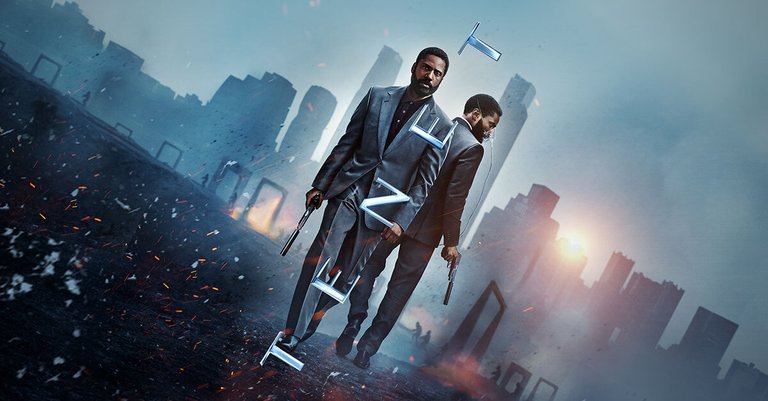
Christopher Nolan's Tenet is a visually stunning and intellectually challenging film that delves into the world of quantum physics and time travel. The movie follows a protagonist, simply known as The Protagonist, as he navigates a complex plot involving time inversion, a phenomenon where objects and people can move backward in time.
The concept of time inversion is at the heart of the film's plot, and it's a concept that's deeply rooted in theoretical physics. In the film, time inversion is explained as a process in which the entropy of an object or a person is reversed, effectively allowing them to move backward in time. This is a radical departure from traditional time travel concepts, where time is simply rewound, and the past is revisited.
At the heart of time inversion is the second law of thermodynamics, which states that in a closed system, the amount of entropy, or disorder, will always increase over time. This means that it's impossible to reverse the flow of time in a closed system, as it would violate the laws of thermodynamics.
However, the scientists in the film have discovered a way to manipulate the flow of time by inverting the entropy of objects and people, effectively reversing their flow through time. This leads to a range of stunning set pieces, including car chases where vehicles move in reverse and explosions that suck in debris instead of blasting it out.
One of the most impressive feats of the film is how it visually represents the concept of time inversion. The movie has a distinctive color scheme, with scenes featuring time inversion colored in shades of blue, while scenes in normal time are colored in warmer hues. This creates a striking contrast between the two states of time, making it clear to the viewer when they're watching a scene in reverse.
The film's depiction of time inversion also raises intriguing questions about the nature of causality and free will. If events in the future can influence the past, does that mean that our actions in the present are predetermined? Or can we still make choices that can alter the course of events, even if they've already happened from a certain perspective?
Ultimately, Tenet is a thrilling and thought-provoking film that combines complex physics concepts with stunning action set pieces. It's a testament to Christopher Nolan's ability to make intellectually challenging movies that are also entertaining and visually stunning. Whether you're a fan of science fiction or just looking for a great action movie, Tenet is definitely worth a watch.
I take lots of time to watch these movies and research about it ,So please make my time worth😊❤️-Wasantha
Thanks for your contribution to the STEMsocial community. Feel free to join us on discord to get to know the rest of us!
Please consider delegating to the @stemsocial account (85% of the curation rewards are returned).
You may also include @stemsocial as a beneficiary of the rewards of this post to get a stronger support.
Congratulations @wasanthakumara! You have completed the following achievement on the Hive blockchain And have been rewarded with New badge(s)
Your next target is to reach 200 upvotes.
You can view your badges on your board and compare yourself to others in the Ranking
If you no longer want to receive notifications, reply to this comment with the word
STOPCheck out our last posts:
Support the HiveBuzz project. Vote for our proposal!