Muskmelon (Cucumis melo)

| Latin Name | Observation Date | Location |
|---|---|---|
| Cucumis melo | Sep 16, 2026 | Natore, Bangladesh |
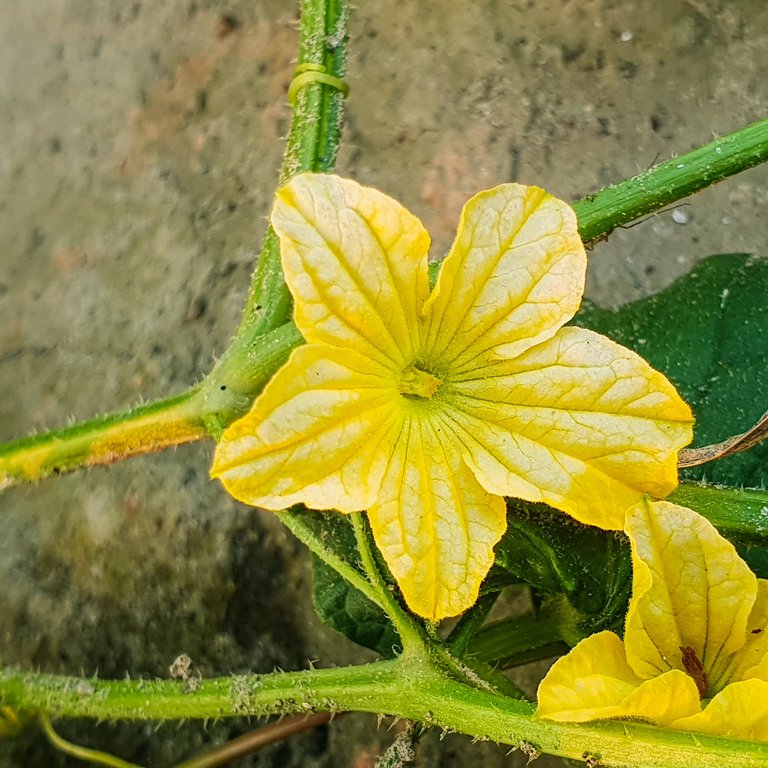
This yellow flowered plant, which is found growing on the side of the land or in the uncultivated soil of the garden, is basically a type of wild weed, which is known as melon or wild melon. Let's learn more about this creeping wild plant.

Scientific name:
In the scientific world, the specific scientific name of this wild plant is Cucumis melo var. agrestis.
Family and genus:
According to the classification of the plant world, it belongs to the Cucurbitaceae family. In the scientific world, their genus or genus name is Cucumis.

Habitat and habitat:
They are mainly spread in various regions of Asia, Africa and Australia. They grow naturally as weeds without any planting in the uncultivated lands, pastures, river banks or around the gardens of our country.

Food and nutrition:
These plants absorb a large amount of nutrients and water from the soil to make their own food. Especially when grown in gardens or crop fields, they absorb the fertilizer and nutrients given to the main plant very quickly.

Shape and lifestyle:
As you can see in the picture, the leaves of this creeping plant are quite rough and it blooms with small bright yellow flowers. A small young fruit is visible under the flower, which has dense small hairs on it. Although it looks like a common melon when young, this fruit is not sweet when ripe; in most cases it is tasteless or slightly bitter.

Benefits:
They do not have much benefit in nature. Although animals, birds or insects sometimes depend on its flowers and fruits, they do not have any direct benefit for agriculture or gardens.

Disadvantages:
In agriculture, they are known as quite harmful weeds. When they grow in crop fields or gardens, they spread very quickly and cause serious damage to the main plant by absorbing the necessary nutrients, water and light from the soil. Since I also have China Three lemon, orange, and malta trees in my own garden, if I see such weeds at the base of the trees or around the rice and pumpkin beds, I quickly clean them up.
I learned about them from various sites including iNaturalist, Wikipedia and Google.
(All posts are written in Bengali and translated into English using Google Translate.)
| Camera Used | Samsung SM-G973F |
|---|---|
| F-Stop | F2.4 |
| ISO speed | ISO |
| Focal length | 26mm |
| Flash | No |
| Editing app | Lightroom |
| Photography | (Cucumis melo) |
| Photographer | @mshbd |
| Location | Natore, Bangladesh |
| Link to original community |
|---|
| https://www.inaturalist.org/observations/403927621 |
| Latitude | Longitude | Map Link |
|---|---|---|
| 24.3351 | 89.1161 | https://www.openstreetmap.org/#map=12/24.3351/89.1161 |
Congratulations @mshbd! You have completed the following achievement on the Hive blockchain And have been rewarded with New badge(s)
You can view your badges on your board and compare yourself to others in the Ranking
If you no longer want to receive notifications, reply to this comment with the word
STOPCheck out our last posts:
Thanks for your contribution to the STEMsocial community. Feel free to join us on discord to get to know the rest of us!
Please consider delegating to the @stemsocial account (85% of the curation rewards are returned).
Consider setting @stemsocial as a beneficiary of this post's rewards if you would like to support the community and contribute to its mission of promoting science and education on Hive.