Outside the protection of Earth's magnetic field, astronauts are exposed to levels of radiation that can cause serious DNA damage, dramatically increase the risk of cancer and compromise long-duration missions, and according to many researchers, the materials currently used in spacecraft are simply not enough to protect astronauts during a trip to Mars.
But the MIT researcher may have found a promising way to solve this problem. Doctoral student Palak Patel from the Massachusetts Institute of Technology is working with an extremely advanced material based on boron nitride nanotubes, known as BNMTs. These structures are tiny hollow cylinders formed by atoms organized on a nanometer scale and although they are invisible to the naked eye, they have impressive properties.
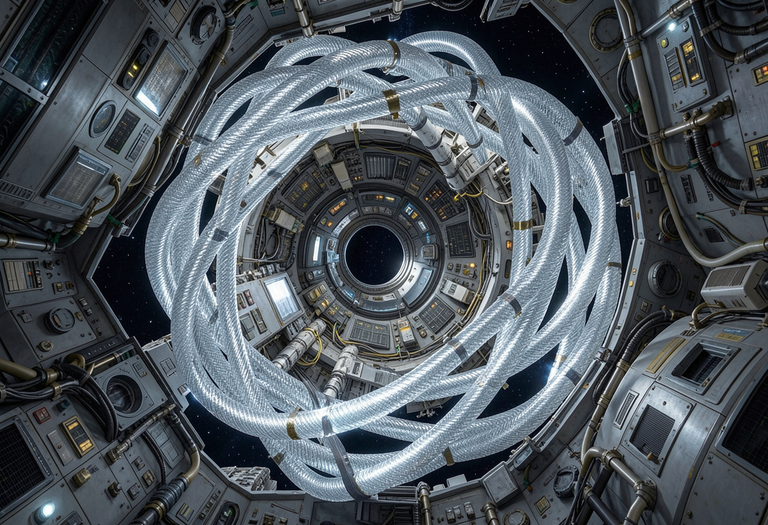
Boron nitride nanotubes are extremely resistant, light and highly efficient in absorbing radiation. The problem was that until recently it was very difficult to incorporate them in large quantities into the materials used in the aerospace industry, but Patel developed a method that allows reaching up to 50% weight concentration within the material, this creates a kind of light and extremely resistant shield against ionizing radiation.
If these technologies continue to evolve, materials like these could become a fundamental part of future spacecraft, but understanding space and its risks is just one of the great mysteries that science is trying to solve.
Thank you for visiting my blog. If you like posts about
#science,
#planet,
#politics,
#rights #crypto,
#traveling and discovering secrets and beauties of the
#universe, feel free to Follow me as these are the topics I write about the most. Have a wonderful day and stay on this great platform :) :)
! The truth will set us free and science is the one that is closest to the truth!

The sect Scientology conducts brainwashing of its members: [religious brainwash] A Piece of Blue Sky Scientology, Dianetics, and L. Ron Hubbard Exposed 5/189