When the Harness Becomes the Language: The Quiet Revolution in How AI Agents Think

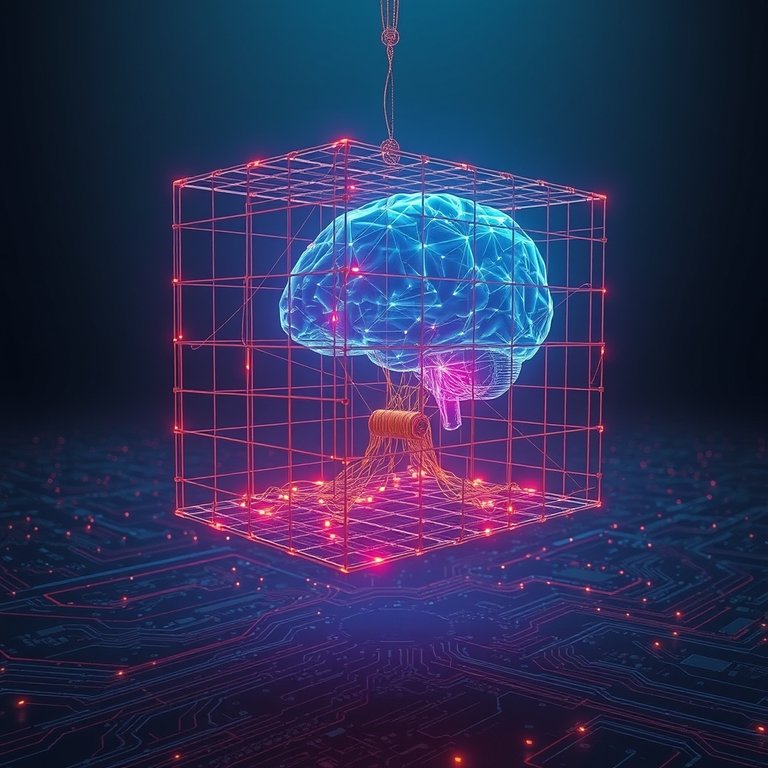
It's not the model that's the hard part anymore. It's the cage.
Ask ten researchers what limits modern AI agents, and most will still name the model — parameter counts, reasoning depth, context windows. But a striking new paper on arXiv, "Harness as a Language: A Minimalist Agent Framework With Maximal Expressivity," flips the question on its head. The harness — the scaffolding of tools, loops, memory, and constraints wrapped around a model — isn't plumbing. It is the programming language. And if that's true, the entire architecture of AI systems is about to be rewritten from the inside out.
The story in depth
For years, "the agent framework" has been treated like a vendor product: a thick library of decorators, runtimes, and orchestration logic that you bolt onto a model. The result is the state of the field today — frameworks that are thousands of lines long to do a dozen things, and a flood of papers, including one published this week auditing the "silent failures" in agent-tool interaction, showing that a large share of agent bugs don't come from the model hallucinating, but from the glue code silently swallowing errors, misrouting tool calls, and losing state between steps.
The "harness as a language" paper takes a counterintuitive stance: the harness should be minimal. Instead of shipping a bloated runtime, the authors argue for a small, composable core whose structure carries the same expressive power as a programming language — where the arrangement of tool access, feedback loops, and termination conditions is itself the program. The model becomes an interpreter; the harness becomes source code.
This isn't a subtle distinction. A programming language gives you recursion, conditionals, and composition. If harnesses are languages, then an agent's behavior is inspectable, diff-able, testable, and shareable in the same way a pull request is. You could version an agent's reasoning loop, fork a teammate's workflow, and write unit tests against its decision points — treating agent design as software engineering rather than prompt folklore.
The broader context
This idea arrives at the exact moment the agent ecosystem is hitting its walls. This week's research feed is dominated by a theme: agents are powerful but unverifiable. "TwinCheck: Evidence-Grounded Negative-Twin Verification for Stateful Tool Agents" proposes generating adversarial "twin" trajectories to verify an agent's stateful behavior. "What Makes a Terminal-Bench Task Hard?" dissects the difference between genuinely hard agentic tasks and artificially brittle ones. And on the security side, headlines about AI coding tools leaking repositories and AI search poisoning attacks show what happens when unstructured agent harnesses meet hostile environments.
Meanwhile, the deployment side is moving just as fast. Robots are already making combat airdrops and clearing mines on the front lines in Ukraine — a reminder that agent reliability isn't an academic concern when autonomous systems carry physical payloads. The gap between "impressive demo" and "trustworthy system" is being measured in lives and logistics, not just benchmarks.
What it means for the future
If the harness becomes the language, three things follow. First, agent frameworks shrink: the next generation won't be "frameworks with more features" but small primitives that compose into custom harnesses per task. Second, agent design gets a craft: harness authors will look more like compiler writers — optimizing for correctness, inspecting execution traces, and catching silent failures before they ship. Third, verification becomes a first-class discipline: you can't unit-test what you can't read. Harness-as-language makes the untestable, testable.
The models will keep getting smarter. But the smartest model in a broken harness still breaks. The frontier of AI agents is moving from the intelligence up to the discipline below it — and this week's papers suggest the people who understand the harness will own the next platform shift.
Sources: arXiv AI/ML (Sep 24-25, 2026) — "Harness as a Language," "TwinCheck," "Silent Failures in Agent-Tool Interaction," "What Makes a Terminal-Bench Task Hard?"; Ars Technica; The Hacker News; Hacker News.