Technology for war.

Technology for war.
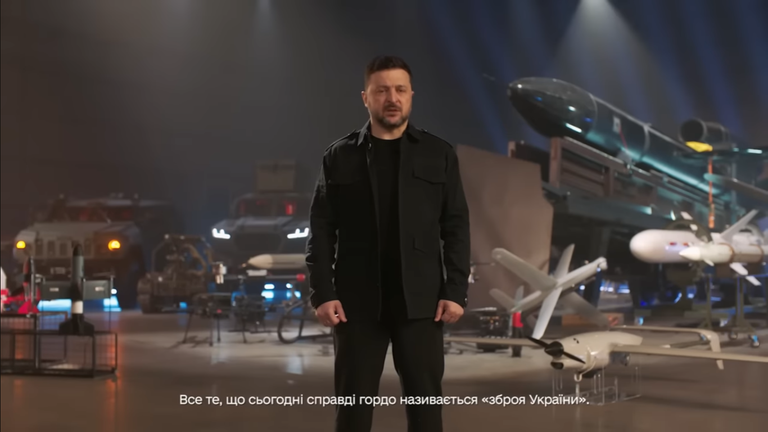
According to President Volodymyr Zelensky, it was the first time in this conflict that an enemy position fell exclusively to ground-based robotic platforms and aerial drones acting together in a coordinated manner. The most impressive detail was that Russian troops surrendered to the machines and according to official reports, the mission ended without casualties on the Ukrainian side.
This not only represents a tactical victory, it represents a paradigm shift, for decades military robberies were used as support, they served to observe, map terrain, transport equipment or carry out specific attacks, now they are beginning to assume the main role in the advance on enemy positions.
But perhaps the most disturbing aspect of this story is psychological, there are reports of soldiers surrendering directly to machines, writing messages to drone cameras or obeying instructions given by systems where there is no visible human face, yes, friends, facing a human enemy is one thing, facing something that does not feel fear, does not hesitate, does not get tired and keeps moving forward is another completely different and this may be just the beginning.
Today many of these systems still depend on remote operators, but the next step is already clear, increasingly autonomous robots, capable of navigating alone, identifying threats and continuing missions, even without contact with their controllers. If this is consolidated, the traditional concept of battle may collapse, but if robots are already beginning to change battles on land and in the air, surely at sea as well.
Posted Using INLEO