Spring is the best time of year to study orchids. The atmospheric conditions in winter and summer don't allow them to bloom, and we only see their flowers between late January and May. That's why this hobby only lasts a few months in my country, and I try to make the most of it by studying the ecology of these extraordinary species! Today we'll be analyzing which orchids are common between 350 and 450 meters above sea level.🙇🏻♀️🚩
Primavera es la estacion del ano mas propicia para estudiar las orquideas, las condiciones atmofericas en invierno y verano no permite la floracion y solo veremos sus flores entre finales de enero hasta mayo, por eso esto, es un hobbie que dura pocos meses en mi pais y trato de aprovecharlo estudiando la ecologia de estas extraordinarias especies! hoy estaremos analizando cuales orquideas son comunes entre 350-450 metros de altura.🌺👩🏻🏫

Characteristics of the study area📍🌏 / Caracteristica del area de estudio🚩📸
 Coordinates: 38.478760, -9.002467🌏🧭 / 38.478760, -9.002467📍🌏

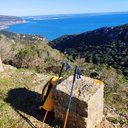
We've already studied orchids in various locations, but this is the first time we've searched in such high-altitude areas. This mountain range constitutes the highest point in the Arrábida, although it's not among the top 100 highest locations in Portugal. It's an interesting find because, as you can see, it's on a coast next to the Atlantic with harsh environmental conditions. My question is, what percentage of species can grow at high altitudes?🙇🏻♀️🚩
Ya estuvimos estudiando orquideas en varios terrenos pero es primera vez que buscamos en zonas bastante altas, esta sierra constituye al punto mas alto de la Arrabida, apesar que esta fuera del top 100 de los locales mas altos de Portugal, es un registro interesante ya que como puedes ver esta en una costero al lado del atlantico con condiciones ambientales rudas, mi duda es del porcentaje de especies cuantas pueden crecer en altura?🌏🧭


https://www.centerofportugal.com/es/articulo/orquideas-silvestres

My intuition that orchids grow more at lower elevations was wrong, which is why I like to do these studies in the field. On the contrary, we are between 400-800m, which is where 57% of the species in Portugal (75 total recorded) grow at those elevations, and this explains why this mountain range is a natural orchid reserve, being the second place with the most orchids sighted!!! How crazy!!📍🏔️
Mi intuicion que las orquideas crecen mas en suelo bajo estaba errada, por eso me gusta hacer estos estudios en el campo, al contrario estamos entre los 400-800m que es cuando el 57% de las especies de Portugal (75 total registradas) crecen en esas elevaciones, y esto explica el porque esta Sierra es una reserva natural de orquideas siendo el segundo sitio con mas orquideas avistadas!!! que locura!!🙇🏻♀️🚩


Only 10-15% grow above 800m, this fact is interesting, that is, only about 7-9 species, and it makes sense because in the places I was in Portugal above 2000 meters I never saw an orchid.
apenas el 10-15% crecen por encima de los 800m, este dato es interesante, osea solo unas 7-9 especies, y tiene sentido porque por los sitios donde estuve en Portugal sobre 2000 metros nunca vi una Orquidea,

What was the work methodology?📍🌏 / Como fue la metodología de trabajo🚩📸
 Specimen of Ophrys🌏🧭 / Ejemplar de Ophrys📍🌏


Sampling (transects through the mountain)🌏🧭 /Muestreo (transectos por la montana)📍🌏
To identify each specimen, I used my field guide "Wild Orchids." I also used other tools such as the website "
https://flora-on.pt/#1orquideas," which is quite comprehensive and where each person posts records of each species in real time. To measure the differences in whether altitude influences orchid growth, I decided to photograph species by the roadside and at altitudes above 400 meters, comparing which ones grow above that elevation or not, or if altitude makes no difference in this case.🌺🙇🏻♀️
Para la identificacion de cada ejemplar utilice mi guia de campo "Orquideas Silvestres", tambien uso otras herramientas como la web: "
https://flora-on.pt/#1orquideas" la cual es bastante completa y cada persona va colocando los registro de cada especie en tiempo real, y para medir las diferencias si la altura influye en el crecimiento de las orquideas decidi fotografiar especies al lado de la carretera y sobre 400 metros de altura, asi comparar cuales crecen o no por encima de esa elevacion o si la altura en este caso no hace diferencia.🧭📍
First interesting fact📍🌏 / Primer dato interesante🚩📸


https://flora-on.pt/#1orquideas
The first curious fact was NOT OBSERVING THE SPECIES: Himantoglossum robertianum at the altitude where I was. This is quite curious because it would fall into the 40% of those that grow below 0-400m, and as you can see in the photo, they grow next to paths, which is a bit strange because what's the point of growing in a space that can be heavily trafficked and damaged!🌺🏔️
El primer dato curioso fue NO OBSERVAR LA ESPECIE: Himantoglossum robertianum a la altura a la que me encontraba, esto puede ser bastante curioso porque entraria en el 40% de las que crecen debajo de 0-400m, y como puedes ver en la foto crecen al lado de caminos un poco extrano porque, que sentido tiene crecer en un espacio que puede ser muy transitado? y puede ser danado!🌏🧭
 The species grows up to 407m🌏🌺/ La especie crece hasta 407m📍👩🏻🏫

Species: Ophrys tenthredinifera by the street🌏🌺/ Especie: Ophrys tenthredinifera al lado de la calle📍👩🏻🏫

https://flora-on.pt/#1Ophrys+tenthredinifera

Photography 300-450 meters🌏🌺/ Fotografia 300-450metros📍👩🏻🏫

 Records up to 501 meters🌏🌺/ Registros hasta 501 metros📍👩🏻🏫

I recently spotted the same species, Ophrys tenthredinifera, both at altitudes of 0-100m and 350-400m. This is surprising because it indicates a species with a relatively high tolerance range for growing at different elevations. There are no records of it above 1000m, so we conclude that it is not among the 20% of species that survive at high altitudes! However, it would fall within the range of 40% to 57% of species that survive at high altitudes. Furthermore, it is a species found throughout almost all of Portugal, with the exception of many areas in the north.🙇🏻♀️🌺
Ahora logre avistar la misma especie: Ophrys tenthredinifera tanto en suelo 0-100m como a 350-400m, y este dato es sorprendente porque nos dice que es una especie con un rango algo de tolerancia para crecer en diferentes relieves, no existen registros sobre los 1000m por tanto concluimos que no es una especie que entra dentro del 20% de las especies que sobreviven a mucha altura! pero si entraria en el rango (40% - 57%) ademas es una especie que se encuentra en casi todo el territorio de Portugal a exepcion de muchas zonas del norte.🏔️🧭

Species I didn't see on the ground (0-100m)📍🌏 / Especies que no vi en el suelo🚩📸

Orchis mascula🌏🌺/ especie: Orchis mascula📍👩🏻🏫

 Interesting fact,🌏🌺/ Dato curioso,📍👩🏻🏫
I was surprised by the very limited distribution of this species, and from what I can see on the map, I am the first person to spot the species here in the mountains.
Quede sorprendido la distribucion de esta especie tan reducida, y por lo que estoy observando en el mapa soy la primera persona en avistar la especie aqui en la montana,


Now I understand why the species is so poorly distributed. The altitude indicates that it grows between 375 and 555 meters, and there are few areas in Portugal with this climate, plus the soil—what a surprise! So we place the species within the 57% range, but with a narrower distribution.🌺🙇🏻♀️
Ya comprendo porque la especie es tan poco distribuida la altitud indica que crece entre 375 a 555 y son pocas las zonas de Portugal con este clima, ademas del suelo, vaya sorpresa!!! entonces ubicamos la especie entre las 57% pero con un rango mas reducido,🌏👩🏻🏫


 Orchis anthropophora,🌏🌺/ especie:orchis anthropophora📍👩🏻🏫
 Wider distribution🌏🌺/ Distribucion mas amplia📍👩🏻🏫
In Portugal, most records of this orchid range from 11 meters to 333 meters, so finding one at over 450 meters was a great find! Apparently, it's rare to find one above 600 meters or even 500 meters! This means we found a specimen that's right on the edge.🚩📍
En Portugal la mayoria de los registro de esta orquidea van entre los 11 metros hasta los 333 metros, conseguirla sobre los 450 metros fue un buen dato! segun es raro pasar los 600 metros o los 500! esto quiere decir que conseguimos un ejemplar que esta en el limite👩🏻🏫

Most abundant orchids📍🌏 / Orquideas mas abundantes🚩📸


 It is not seen in the north of the country🌏🌺/ No es vista en el norte del pais📍👩🏻🏫

I saw the species Ophrys lutea both at higher elevations and by the roadside, which tells us that it is also common. As you can see on the map, it is well distributed; since we can find it between 10 and 509 meters, it is feasible to locate it on almost the entire southern edge of Setúbal! And although it is not the most common because it needs a specific pollinator, it is among the three most abundant!🏔️📍
La especie; Ophrys lutea la vi tanto en altura como al lado de la carretera lo que nos dice que tambien es comun y como puedes ver en el mapa esta bien distribuida, como podemos localizarla entre 10-509m es viable localizarla en casi todo el margen sul de Setubal! y apesar de que no es la mas comun porque necesita un polinizador especifico estra entre las 3 mas abundantes!🌺🙇🏻♀️
We conclude🌏🌺/ concluimos📍👩🏻🏫


Common in both locations (Orchis italica)🌏🌺/ Comun en ambos locales (Orchis italica)📍👩🏻🏫
✅ The study area is rich in orchid diversity because it has an altitude where more than half of the orchids present in Portugal are located.
✅ The most abundant species at higher altitudes are: Orchis italica and Orchis mascula (possibly due to the large flowering in the area that attracts pollinators).
✅ The most abundant species in both sites is: Ophrys tenthredinifera, with more than 200 specimens.
✅ Barlia robertiana was not sighted above 250m, which validates the scientific information that it is not a high-altitude species.
=================================================================================
THANKS FOR READING ME (PHOTOS AND VIDEOS OF MY PROPERTY) / GRACIAS POR LEERME FOTOS Y VIDEOS DE MI PROPIEDAD🙂🧠🦾👍
We invite you to visit our community/ te invitamos a visitar nuestra comunidad📸🧭
https://www.reddit.com/r/Amazingnaturehive/

Good morning, dear friend @biologistbrito.
You're clearly passionate about nature, and what a fantastic idea to explore the heights and study this beautiful species.
It's wonderful to have you as a guide; you've been able to identify some beautiful species.
Excellent photos, I appreciate you sharing this natural experience.
Have a wonderful day.
We appreciate your work and your publication has been hand selected by the geography curation team on behalf of the Amazing Nature AN Community. Keep up the good work!
Tremenda investigación. Tuve varias plantas, pero en pandemia entre los conejos y otros animalitos acabaron con ellas.
Mis abuelas siempre las colgaban de los arboles. Era de gran emoción verlas florecer.
¡Enhorabuena!
✅ Has hecho un buen trabajo, por lo cual tu publicación ha sido valorada y ha recibido el apoyo de parte de CHESS BROTHERS ♔ 💪
♟ Te invitamos a usar nuestra etiqueta #chessbrothers y a que aprendas más sobre nosotros.
♟♟ También puedes contactarnos en nuestro servidor de Discord y promocionar allí tus publicaciones.
♟♟♟ Considera unirte a nuestro trail de curación para que trabajemos en equipo y recibas recompensas automáticamente.
♞♟ Echa un vistazo a nuestra cuenta @chessbrotherspro para que te informes sobre el proceso de curación llevado a diario por nuestro equipo.
🏅 Si quieres obtener ganancias con tu delegacion de HP y apoyar a nuestro proyecto, te invitamos a unirte al plan Master Investor. Aquí puedes aprender cómo hacerlo.
Cordialmente
El equipo de CHESS BROTHERS
Pues si que están altas las orquideas, muchas gracias por compartir estas imágenes, mi estimado @biologistbrito.
Thanks for your contribution to the STEMsocial community. Feel free to join us on discord to get to know the rest of us!
Please consider delegating to the @stemsocial account (85% of the curation rewards are returned).
Consider setting @stemsocial as a beneficiary of this post's rewards if you would like to support the community and contribute to its mission of promoting science and education on Hive.
You've been curated by @amazingdrinks! Delegations welcome!
Lindas orquídeas, no son fáciles de conseguir, además son las reinas de las alturas debes escalar para ver estas bellezas, gracias por compartir