Hello friends of this beautiful community! Today I took a hike of approximately 8 km to locate some birds near where I live. This was my first time visiting the windmills (da Torre and da Passagem), both connected to the Tagus River. Because they are abandoned, they are an excellent place to find some local birds. I will try to identify them and explain a little about their ecology, as well as learn about the history of the windmills.🌍🐦
¡Hola amigos de esta hermosa comunidad! Hoy realice una caminata de aproximadamente 8 km para localizar algunas aves cerca de la zona donde vivo, primera vez que visito los molinos (da Torre, da Passagem) ambos conectados al río Tejo y por estar abandonados son un excelente local para encontrarnos algunas aves locales, intentaré identificarlas y explicar un poco sobre su ecología, además de ver las historias de los Molinos.🦩📸

Visit to the "da Passagem" mill🏞️🌅/ Visita al molino "da Passagem"🐦🗺️
 visit to the mill with coordinates: 38.646753, -9.107290🐦📸/ Visita del molino con coordenadas:38.646753, -9.107290🌅


As you can see, I'm in a fairly arid area. We're literally referring to a forest (dunes). The river you see in the photos is the Tagus, which divides Lisbon into two parts, north and south! The estuary is important for the ecology of the aquatic birds of Seixal and Setubal, which is why it's classified as a nature reserve! In total, there are more than 194 species of birds circling the river, using it for feeding or nesting.🐦📸
Como puedes ver estoy en una zona bastante arida literalmente hacemos referencias a un bosque de tipo (dunas), el río que ves allí en las fotos se trata del Tejo, él divide Lisboa en dos partes norte y sur! el estuario es importante para la ecología de las aves acuáticas de Seixal y Setubal, por ello está clasificado como reserva natural! en total hay más de 194 especies de aves rondando el río y utilizándolo como alimentación o nidificación.🦩🌅
https://seaeo-tours.pt/vida-selvagem/aves-aquaticas/#:~:text=Algumas%20das%20esp%C3%A9cies%20que%20podemos%20encontrar%20durante,Perdiz%2Ddo%2Dmar%20(Glareola%20pratincola)%20*%20Gar%C3%A7a%2Dbranca%2Dpequena%20(Egretta%20garzetta)


The little heron or Egretta garzetta is a common aquatic bird in Portugal, in fact it is the most photographed in the Tejo River, it uses the southern area near the "da passagem" mill because it is here where the river connects with other tertiary rivers that bring fresh rainwater from the city, when the tide is low the herons take advantage of this decline in depth to fish small and medium-sized fish, usually mullet (Mugil cephalus) or (Dicentrarchus labrax)
https://www.avesdeportugal.info/egrgar/🐦📸
La garza común o Egretta garzetta es un ave acuática común en Portugal en realidad es la más fotografiada en el Río Tejo, utiliza la zona sur proxima al molino "da passagem" porque es aqui donde se conecta el Rio con otros rios terciarios que traen agua dulce de lluvia de la ciudad, cuando la marea es baja las garzas aprovechan ese declive de profundidad para pescar peces de porte pequeno y mediano, habitualmente son lisas (Mugil cephalus) o (Dicentrarchus labrax)
https://www.avesdeportugal.info/egrgar/🏞️🌍


How beautiful it is to find some individuals of Spatula clypeata, they do not inhabit the territory all year round, on the contrary, they are common in winter, they frequent deeper areas of the estuary than herons because they swim in groups and have a varied diet that ranges from crustaceans to insects. We can also find the species here: (Anas platyrhynchos), the latter being more common and due to the shape of its beak I am more certain that it is this species.📸🐦
que hermoso también encontrarnos algunos individuos de Spatula clypeata no habitan el territorio durante todo el año, al contrario, común en época invernal, frecuenta zonas del estuario más profundas que las garzas porque nada en grupos tienen una alimentacion variada que abarca desde crustáceos hasta insectos, tambien podemos encontrarnos aqui la especie: (Anas platyrhynchos) este ultimo es mas comun y por la forma del pico estoy mas seguro que se trata de esta especie.🌅🦩
https://www.avesdeportugal.info/anapla/
History and occupation of the Tide Mill🏞️🌅/ Historia y ocupacion del Molino de marea🐦🗺️

Many of the mills have the structure of a house, and that's because the caretaker and his family actually lived on the upper floors. Most of them were and still are privately owned, which is why they're abandoned. No one is interested in fixing a mill, and it can be very expensive! The owner of the "da Passagem" mill was Gama Lobo. It was built in the 16th century, so it's quite old. There are records that it was used until the 20th century to grind cereals. An important fact: some mills were transformed into properties. That's why we see a house in the middle of nowhere.🐦📸🌍
Muchos de los molinos tienen la estructura de una casa y eso porque en realidad en los pisos de arriba vivia el cuidador y su familia, la mayoría de ellos eran y aún continúan a ser privados y es por ello que están abandonados nadie tiene interés de arreglar un molino además que puede ser eso muy costoso! el propietario del molino "da Passagem" fue Gama Lobo, fue construido en el siglo XVI por lo que es bastante antiguo. Hay registros que fue usado hasta el siglo XX para moler cereales, dato importante: algunos molinos fueron transformados en propiedades. Por ello vemos una casa en medio de la nada.🌅🏞️📍
http://repositorio.ulusiada.pt/handle/11067/3327?mode=full


Now I managed to photograph a specimen of Upupa sp. This species of bird is very beautiful and curious! It is not afraid of people! They could be called "migratory" because they have a nomadic behavior. They belong to the family: (Upupidae) and there are only three species. In Portugal, they are seen in almost the entire territory, including the islands. It is common to see them making holes in the sand with their long beak and capturing insects. They are not specifically linked to the river, but I saw several specimens in the dunes.🦩🌅
Ahora logre fotografiar un ejemplar de Upupa sp, esta especie de ave es muy bonita, y curiosa! ¡No le tiene miedo a las personas! podrian decirse que son "migratorias" porque tienen un comportamiento nomada, pertenecen a la familia: (Upupidae) y solo existen tres especies, en Portugal se ven en casi todo el territorio, inclusive las islas, común verla haciendo agujeros en la arena con su largo pico y capturando insectos, no están ligados concretamente con el río, pero vi varios ejemplares en las dunas.📸🌍
https://pt.wikipedia.org/wiki/Poupa

This is one of my favorites (Saxicola rubicola) has the habit of perching on dunes and aquatic plants to capture insects such as dragonflies and butterflies. It is common to see it in this area because there is a forest next to the mill! This is widely distributed and we see it both in the north and south of the country. It has dinophysism and the male is easy to identify.
https://www.avesdeportugal.info/saxtor/🦩📍
Este es uno de mis preferidos (Saxicola rubicola) tiene el hábito de posarse en las dunas y plantas acuáticas para capturar insectos como libelulas, mariposas es normal verlo por esta zona porque al lado del molino hay un bosque! Este es de distribucion amplia y lo vemos tanto como el norte como sur del pais, tiene dimosfismo y el macho es facil de identificar.
https://www.avesdeportugal.info/saxtor/👩🏻🏫🏞️"da Torre" tidal mill🏞️🌅/ Molino de marea "da Torre"🐦🗺️

visit to the mill with coordinates: 38.646753, -9.107290🐦📸/ Visita del molino con coordenadas:38.646753, -9.107290🌅

It is no coincidence that we also see a specimen of Passer domesticus in the windmills. This bird, already considered invasive in America, has a wide distribution in Portugal.
Passer domesticus no es casualidad que también veamos por los molinos un ejemplar de Passer domesticus, esta ave ya siendo considerada invasora en América tiene una distribución amplia en Portugal.
https://wilder.pt/naturalistas/conheca-as-cinco-especies-de-pardais-de-portugal

This mill was built in 1755 during the Lisbon earthquake. It was explored by Feliciano Velho and was used to make flour until the 20th century. It was rebuilt after being destroyed by the earthquake.
Este molino fue construido en 1755 en plena epoca del terremoto de Lisboa, fue explorado por: Feliciano Velho, se utilizo para fabricar harina hasta el siglo XX, fue reconstruido porque se destruyo con el terremoto.
https://www.monumentos.gov.pt/Site/APP_PagesUser/SIPA.aspx?id=32863


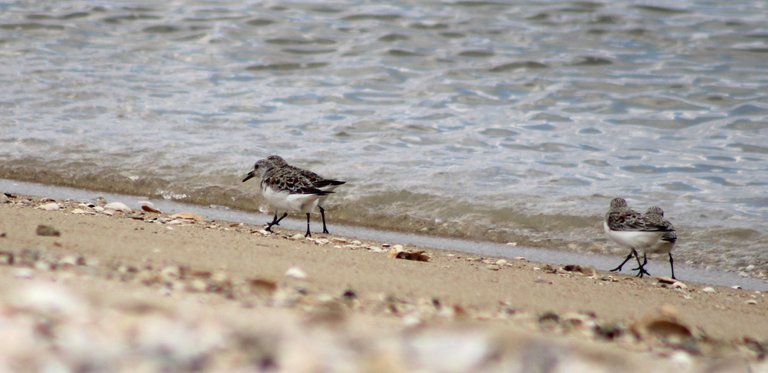
These are very difficult to identify the waders, there is even a book about their identification, for me it is a specimen of (Arenaria melanocephala), if it is not the species it is possibly within the genus Arenaria, these birds feed on small worms and invertebrates on the shores of the beach, it is difficult to see them nesting and they are very sensitive to people🐦
estos son muy dificiles de identificar los limicolas, hasta existe un libro sobre identificacion de ellos para mi es un ejemplar de (Arenaria melanocephala), si no es la especie posiblemente esta dentro del genero Arenaria, estas aves se alimentan de pequenos gusanos e invertebrados en las orillas de la playa, es difícil verlos nidificando y son muy sensible a las personas🦩🌍
https://www.biodiversity4all.org/taxa/3937-Arenaria


This image is an example of how birds are social, or most species can interact and share a space, here we see some waders, but the abundant species is the seagull, I see more than 100 of them resting, I don't think they sleep here because the tide will rise now, so they tend to sleep on rocks or places near the river.🦩📍
Esta imagen es un ejemplo de como las aves son sociales, o la mayoría de las especies pueden interactuar y compartir un espacio, aquí vemos algunas limícolas, pero la especie abundante es la gaviota, veo más de 100 de ellas descansando, no creo que duerman aquí porque la marea subirá ahora, por ello tienden a dormir en rocas o sitios cerca del río.🌅📸


I'm curious why birds like seagulls gather in such large flocks? According to the reference, it's a clever way to detect predators, but both in the water and here on the beach they don't have predators; they do it to socialize. Flamingos create groups of "best friends." Could the same thing happen with these birds? https://www.elplural.com/leequid/omg/pajaros-unen-bandadas-emigrar_247496102
¿Me da curiosidad por qué las aves como las gaviotas se reúnen en bandadas tan grandes? Según la referencia es una forma inteligente de detectar depredadores, pero tanto en el agua como aquí en la playa no tienen depredadores, lo hacen para socializar?, los flamencos crean grupos de "mejores amigos"sucederá lo mismo con estas aves?https://www.elplural.com/leequid/omg/pajaros-unen-bandadas-emigrar_247496102




THANKS FOR READING ME (PHOTOS AND VIDEOS OF MY PROPERTY) / GRACIAS POR LEERME FOTOS Y VIDEOS DE MI PROPIEDAD🙂🧠🦾👍

We appreciate your work and your publication has been hand selected by the geography curation team on behalf of the Amazing Nature AN Community. Keep up the good work!
Good afternoon, dear friend @biologistbrit
What a beautiful place you chose for this hike.
Beautiful photographs.
Thanks for your contribution to the STEMsocial community. Feel free to join us on discord to get to know the rest of us!
Please consider delegating to the @stemsocial account (85% of the curation rewards are returned).
Consider setting @stemsocial as a beneficiary of this post's rewards if you would like to support the community and contribute to its mission of promoting science and education on Hive.