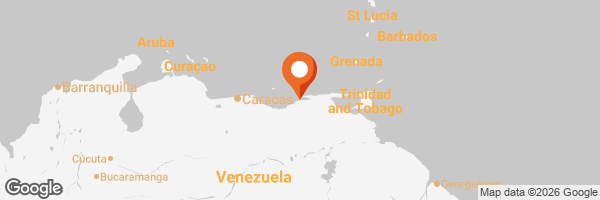
Greetings, fellow nature lovers! I wish you all an excellent and blessed week. It is a pleasure to share my visit to Ayacucho Park, where I admired the stunning Ceiba Ceiba pentandra and Tamarind Tamarindus indica trees, as well as various ** Fan Palms** Sabal domingensis, scattered throughout the grounds—all of which provide welcome shade and coolness. Like other public spaces in the city—such as the many town squares and Guaquerí Park—this park stands out for its large trees, which offer visitors shaded, breezy spots to relax. They also serve as a habitat for various animal species. The park is ideally located in the heart of the city, near the Mariño Bridge and the avenue of the same name, stretching all the way to the skateboard park just a few meters from the Raúl Leonis Bridge. Upon entering, you are greeted by a walkway lined with palm trees, with the Manzanares River flowing along the right side. You can also catch a glimpse of the Mariño Bridge and its beautiful murals; I was particularly struck by a large tamarind tree located near the bridge.
As I moved along, I took a few photographs of the river. I also managed to snap a picture of an iguana resting peacefully on the steps that lead down to the riverside walkway; as people walked by on the path, the iguana climbed up into a tamarind tree. I was struck by the pose it held while on the steps—it seemed to be soaking up some sun—but within a few seconds, it had already scurried up the tree. I then headed toward the center of the park, where I encountered a beautiful black bird walking calmly through the grass near some palm trees. There were several of them, but I only managed to photograph one, keeping a respectful distance so as not to disturb these feathered friends. Continuing my walk through the park, I made my way to the large Ceiba tree. This tree stands out because of its roots, which form structures resembling walls and caves that serve as shelters for various animals. It is located near some benches, and parts of its roots and trunk are painted white; according to the staff in charge of park grounds and maintenance, this layer of paint helps protect the trees from certain pests and debris. Around its roots, the tree forms various walls and openings that provide a home for birds, mammals, and other creatures. As seen in the photograph, the trunk is quite thick, and its branches are expansive. Nearby, there are other, smaller Ceiba trees, with grass growing around their roots.
Along the riverbank, one can find several Tamarindus indica trees. A charming iguana has climbed one of them; its coloration, which matches that of the tree, allows it to camouflage itself and seek protection from certain predators. These are evergreen trees that can reach up to 30 meters in height; they are long-lived and slow-growing, featuring alternate, pinnate leaves (7.5 × 15 cm) composed of ten to twenty opposite leaflets—each measuring between 1.25 cm and 2.5 cm—along with small, deciduous stipules. The flowers are arranged in clusters, sometimes forming panicles at the tips of the branches.
The tree produces delicious fruit with a pleasant, acidic flavor, which is used to prepare juices, ice cream, and desserts. The fruit's pulp also serves as a seasoning in both Asia and Latin America. It is a common tree in Venezuela, and during the harvest season, the fruit can be found in markets at affordable prices.
Native to tropical Africa—specifically Sudan, where it still grows in the wild—the tree is also indigenous to a vast region stretching from Cape Verde to Yemen and Oman.[3] It spread to South Asia, likely through human intervention, and has been cultivated there for thousands of years.
It was introduced to Mesoamerica and South America by the Spanish and Portuguese in the 16th century. Today, Mexico, Central America, the Caribbean, and northern Peru are among the largest producers and consumers of this fruit.
Other uses
The pulp, leaves, and bark have medicinal applications.
For example, in the Philippines, the leaves are traditionally used in an infusion to reduce fevers caused by malaria.
Due to its medicinal properties, it is used in Ayurvedic medicine to treat certain digestive or stomach-related issues.
It also acts as an effective laxative—which can be helpful in cases of persistent constipation—as well as a natural, albeit very mild, sleep aid.
Tamarind wood can be used to manufacture furniture, thanks to its density and durability.
Tamarind trees are very common in southern India, where they are used to provide shade along the country’s roads and highways.
¡Saludos, amantes de la naturaleza! Les deseo a todos una excelente y bendecida semana. Es un placer compartir mi visita al Parque Ayacucho, donde pude admirar imponentes Ceibas Ceiba pentandra Tamarindos Tamarindus indica, además diversas Palmeras abanicoSabal domingensis distribuidas por todo el lugar; todos ellos brindan una agradable sombra y frescura. Al igual que otros espacios públicos de la ciudad, como las numerosas plazas y el Parque Guaquerí, este parque destaca por sus grandes árboles, que ofrecen a los visitantes rincones sombreados y ventilados para relajarse. Asimismo, sirven como hábitat para diversas especies animales. El parque goza de una ubicación privilegiada en el corazón de la ciudad, cerca del Puente Mariño y de la avenida homónima, extendiéndose hasta llegar a la pista de patinaje, situada a pocos metros del Puente Raúl Leonis. Al entrar, uno es recibido por un sendero flanqueado por palmeras, con el río Manzanares fluyendo a su derecha. También es posible divisar el Puente Mariño y sus hermosos murales; me llamó especialmente la atención un gran tamarindo situado cerca del puente.
Mientras recorría el lugar, tomé algunas fotografías del río. También logré capturar a una iguana que descansaba plácidamente en los escalones que conducen al sendero junto al río; al pasar la gente por el camino, la iguana trepó a un tamarindo. Me sorprendió la postura que mantenía en los escalones, parecía estar tomando el sol, pero en cuestión de segundos ya había subido rápidamente al árbol. Luego me dirigí hacia el centro del parque, donde encontré una hermosa ave de plumaje negro caminando con calma sobre el césped, cerca de unas Palmeras. Habían varias aves, pero solo logré fotografiar a una, manteniendo una distancia respetuosa para no molestar a estos amigos alados. Continuando mi recorrido, llegué hasta la gran Ceiba. Este árbol destaca por sus raíces, que forman estructuras similares a muros y cuevas, sirviendo de refugio para diversos animales. Se encuentra cerca de unos bancos, y partes de sus raíces y de su tronco están pintadas de blanco. Según el personal encargado de los terrenos y el mantenimiento del parque, esta capa de pintura ayuda a proteger los árboles de ciertas plagas y residuos. Alrededor de sus raíces, el árbol forma diversas paredes y aberturas que sirven de refugio a aves, mamíferos y otras criaturas. Como se puede observar en la fotografía, el tronco es bastante grueso y sus ramas son extensas. Cerca de allí, hay otros árboles de ceiba más pequeños, con hierba creciendo alrededor de sus raíces.
A lo largo de la ribera del río, es posible encontrar varios ejemplares de Tamarindus indica. Una encantadora iguana ha trepado a uno de ellos; su coloración, que coincide con la del árbol, le permite camuflarse y buscar protección frente a ciertos depredadores. Se trata de árboles de hoja perenne que pueden alcanzar hasta 30 metros de altura; son longevos y de crecimiento lento, y presentan hojas alternas y pinnadas (de 7,5 × 15 cm) compuestas por entre diez y veinte folíolos opuestos —cada uno de ellos de entre 1,25 cm y 2,5 cm de longitud—, además de pequeñas estípulas caducas. Las flores se disponen en racimos, formando a veces panículas en los extremos de las ramas.
El árbol produce un fruto delicioso, de sabor agradable y ácido, que se utiliza para preparar jugos, helados y postres. La pulpa del fruto también se emplea como condimento, tanto en Asia como en América Latina. Es un árbol común en Venezuela y, durante la temporada de cosecha, sus frutos pueden encontrarse en los mercados a precios asequibles.
Originario de África tropical —concretamente de Sudán, donde aún crece de forma silvestre—, este árbol es también autóctono de una vasta región que se extiende desde Cabo Verde hasta Yemen y Omán.[3] Se difundió por el sur de Asia, probablemente debido a la intervención humana, y allí se ha cultivado durante miles de años.
Fue introducido en Mesoamérica y Sudamérica por los españoles y portugueses en el siglo XVI. En la actualidad, México, Centroamérica, el Caribe y el norte de Perú figuran entre los mayores productores y consumidores de este fruto.
Otros usos
La pulpa, hojas y la corteza tienen aplicaciones medicinales.
Por ejemplo, en Filipinas, las hojas son tradicionalmente usadas en infusión para reducir la fiebre causada por malaria.
Debido a sus propiedades medicinales es utilizado como medicamento ayurvédico para algunos problemas de digestión o estomacales.
También es un laxante eficaz, por lo cual puede ayudar en casos de estreñimiento pertinaz, y un somnífero natural, aunque muy suave.
La madera del tamarindo puede ser utilizada para fabricar muebles, de acuerdo a su densidad y durabilidad.
Los árboles de tamarindo son muy comunes en el sur de la India. Se utilizan para dar sombra en las carreteras y autopistas del país.


Characteristics of Ceiba pentandra
Ceiba trees are the most abundant in the park, followed by royal palms, which form a beautiful path. Throughout the expansive grounds, one can find several Ceiba specimens of varying sizes. Particularly striking are the shapes of their roots and their thick trunks—which can reach up to 3 meters in diameter—as well as the protuberances that develop on the trunk and roots over time. Their branches are broad and wide-spreading, providing shade across a large portion of the area.
Native to the Mesoamerican region, this species is distributed globally throughout the intertropical zone.
It is cultivated in plantations for the production of fiber and oil, and is also used for ornamental purposes, reforestation, and in carpentry.
It is a large, deciduous tree that can exceed 60 to 70 meters in height. It features a straight, thick trunk (3 meters in diameter)—typically unbranched for much of its length—that supports a large crown with horizontally spreading branches.
Its buttress roots, which can reach several meters in height and extend both above and below the ground, act as structural supports.
These trees are fast-growing and long-lived. They shed their leaves at the beginning of the dry season—prior to flowering, which occurs between January and March—and grow new foliage shortly thereafter.
The tree blooms between December and March (though not every year) and bears fruit between the ages of 3 and 6, with fruiting taking place from April to June.
Its pollination system is both anemophilous (via wind) and zoophilous (facilitated by animals such as bats and bees).
Uses
The cotton-like fiber surrounding the seeds (kapok) is used in the manufacture of various items.
The tree is also used for ornamental purposes and in reforestation efforts; its wood is utilized in construction, carpentry, and as fuel.
In some regions, parts of the plant are consumed; the oil extracted from the seeds is used industrially to produce margarine, while the residue left over after oil extraction serves as animal fodder.
The seeds are consumed cooked or roasted, and the leaves, flowers, and young fruits are typically eaten cooked.
There is no extensive medical evidence to support the traditional medicinal uses of this plant. However, phytochemical analyses have revealed the presence of flavonoids, leucoanthocyanidins, tannins, and terpene lactones. These compounds are associated with various medicinal applications, including use as an anti-inflammatory for wounds, a treatment for skin eruptions and rheumatism, an antispasmodic, an emetic, an astringent, an antipyretic, and a diuretic.
It may help manage hemorrhages, diarrhea, dysentery, and bronchial congestion, and can provide relief for migraines, sprains, and open wounds.
The seeds are toxic; the bark, leaves, and resin are the parts typically used. The bark is prepared as a decoction, while fresh leaves are used in poultices and infusions.
The tree is planted for ornamental purposes in urban areas; along with the samán (raintree), it is frequently used as a centerpiece in parks throughout towns with warm climates in Colombia and Venezuela.
It is a national symbol of Guatemala. It was designated the National Tree in 1955, following a proposal by the Guatemalan botanist Ulises Rojas, to honor one of the symbols of the Maya civilization.
Characteristics of Sabal domingensis
It is an evergreen palm with green foliage and black fruit.
It grows well in full sun and requires only occasional or minimal watering.
Once established, it is drought-tolerant.
It thrives in average, well-drained soil.
It is a good choice if you are looking for a plant that is resistant to heat and Verticillium wilt.
It is native to Hispaniola and Cuba.
It is a palm with a single, very strong trunk, reaching a height of up to 10 meters and a diameter of 60 centimeters.
Each plant has 20–30 leaves, with approximately 90 leaflets per leaf.
The inflorescences are branched and arching, and are at least as long as the leaves; the fruit is black.
Uses
The leaves are used for thatching and for weaving a variety of items, such as hats, baskets, and mats.
Características de la Ceiba pentandra
Las ceibas son los árboles más abundantes en el parque, seguidas por las palmas reales, que conforman un hermoso sendero. En todo el extenso terreno es posible encontrar diversos ejemplares de ceiba de distintos tamaños. Resultan especialmente llamativas las formas de sus raíces y sus gruesos troncos, que pueden alcanzar hasta 3 metros de diámetro, así como las protuberancias que se desarrollan en el tronco y en las raíces con el paso del tiempo. Sus ramas son amplias y se extienden extensamente, proporcionando sombra a gran parte del área.
Es originario de la región de Mesoamérica y se distribuye mundialmente por la zona intertropical.
Se cultiva en plantaciones para la obtención de fibra y aceite, también se utiliza de forma ornamental, en la reforestación y la carpintería.
Es un árbol caducifolio de gran envergadura que puede superar los 60 o 70 metros de altura, con tronco recto, grueso (3 m de diámetro) y normalmente sin ramificar formando una gran copa con ramas extendidas horizontalmente.
Las raíces tabulares de varios metros de altura y extendidas por encima y por debajo del suelo funcionan como contrafuertes.
Los árboles son de rápido crecimiento y tienen una longevidad alta, estos pierden las hojas al comienzo de la estación seca, antes de la floración entre enero y marzo, y las renueva poco después.
Florece de diciembre a marzo aunque no lo hace anualmente, y fructifica entre los 3 o 6 años en los meses de abril a junio.
Su sistema de polinización es en parte anemófila por el viento y zoófila por medio de animales como murciélagos y abejas.
Usos
Se usa la fibra algodonosa que rodea las semillas (kapok) en la fabricación de diversos objetos.
También es usada de forma ornamental y en la reforestación, su madera se usa en la construcción, carpintería y como combustible.
En algunos lugares se consumen partes de la planta, el aceite de la semilla se usa industrialmente para fabricar margarinas, el residuo que se obtiene después de extraer el aceite, se usa como forraje.
La semilla es consumida cocida o tostada y las hojas, flores y frutos tiernos suelen comerse cocidos.
No hay amplia evidencia médica que respalde los usos medicinales de esta planta que se usa de forma tradicional.
En análisis fitoquímicos se revela la presencia de flavonoides y leucoantocianidinas, taninos y lactonas terpénicas. Compuestos estos que le atribuyen usos medicinales importante como antiinflamatorio para heridas, tratamiento de granos, reumatismo, antiespasmódico, vomitivo astringente, antitérmico, antiespasmódico y diurético.
Puede ayudar a controlar hemorragias, diarrea, disentería, congestión bronquial y alivia migrañas, torceduras y heridas abiertas.
Las semillas son tóxicas, se usan la corteza, las hojas y la resina. Con la corteza se hacen decocciones, las hojas frescas se usan en cataplasmas e infusiones.
Se utiliza como árbol ornamental en las ciudades, junto con el samán son muy usados como centro de parques en pueblos de clima cálido de Colombia y también en Venezuela.
Es un símbolo patrio de Guatemala. Fue declarado Árbol Nacional por iniciativa del botánico guatemalteco Ulises Rojas en 1955 para honorar uno de los símbolos Maya.
Carascterísticas de Sabal domingensis
Es una palmera/cícada o árbol de hoja perenne con follaje verde y frutos negros.
Crece bien a pleno sol y requiere riego ocasional o escaso.
Una vez establecida, tolera la sequía.
Se desarrolla bien en suelos promedio y bien drenados.
Es una buena opción si busca una planta resistente al calor y a la marchitez por Verticillium.
Es originaria de la Hispaniola y Cuba.
Es una palmera con tallos solitarios, muy fuertes, que alcanza un tamaño de hasta 10 metros de alto y 60 centímetros de diámetro.
Las plantas tienen 20-30 hojas, cada una con cerca de 90 foliolos.
Las inflorescencias están ramificados y arqueadas y al menos son tan largas como las hojas, la fruta de color negro.
Usos
Las hojas se utilizan para paja y para tejer una variedad de artículos como sombreros, cestas y esteras.



Blessings!

¡Bendiciones!

Translated with https://www.deepl.com/translator
          All images are my own.

   Todas las imágenes son de mi autoría.
Fuente consultada: